

Creative solutions helped school districts feed 500,000 more kids than last year!
On a quiet side street near Camelback Road and 39th Avenue in West Phoenix, a small school bus idles in the heat of summer. The hum of the vehicle’s hard-working air conditioner is a beacon for kids in the area: lunch is ready just steps away from home!
Inside, Hilda and Gabby, part of Alhambra School District’s nutrition team, set up small tables to fill with freshly cut watermelon and cucumbers, everybody’s favorite pizza, and the familiar cartons of cold milk.
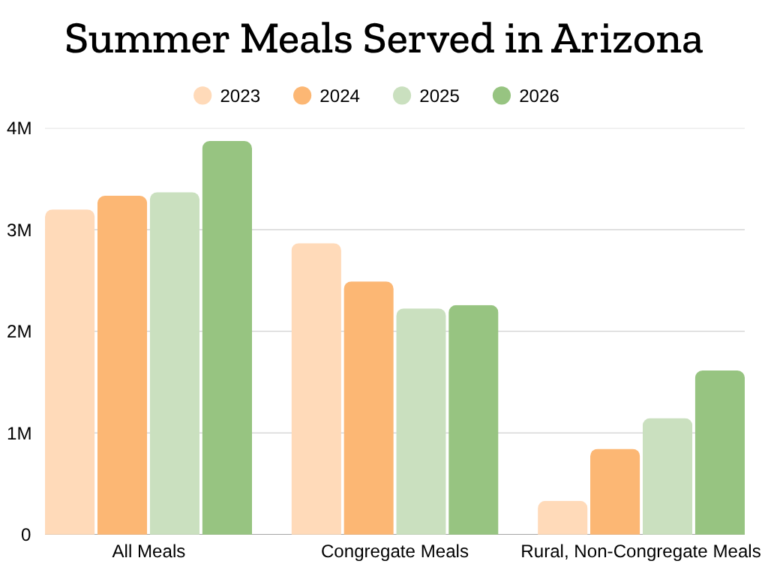
These are some of the 3.8 million summer meals that were served in the summer of 2026 across Arizona! That’s about a 500,000 meal increase from the summer of 2025.
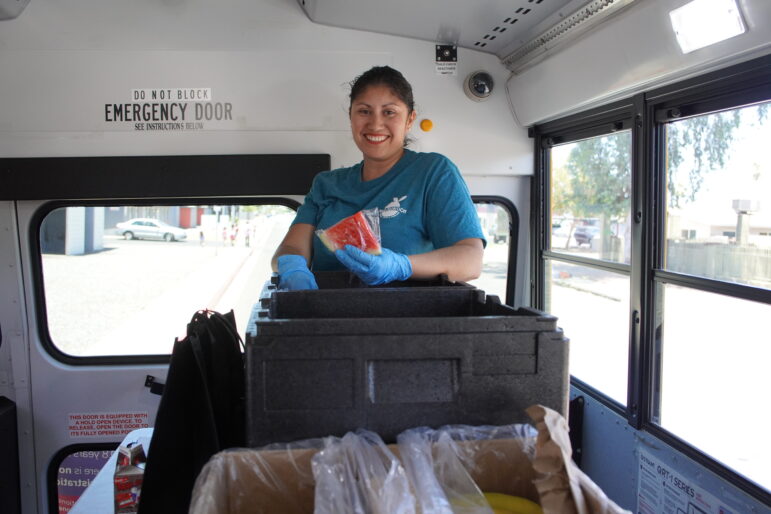
“Our days start really early in the summer – I cut this watermelon at five this morning. We always serve a variety of fresh vegetables and fruits. Everything is cooked fresh the day that it’s served. We serve two different kinds of pizza, nachos, tacos just like Taco Bell…but kids do really love the cold jicama and bananas,” said Hilda, Kitchen Manager at Alhambra School District.
Each year, the summer food service program in Arizona, also known as SUN Meals, gains traction as schools adapt with creative models and outreach in rural and urban areas. AzFBN’s innovation team supports school districts across the state as new resources and federal regulations are rolled out for the program.
“Non-congregate” meal options like grab-and-go and multiple-day pickups make a huge difference for working parents, but they are only allowed through the federal program in certain rural areas.
The “Lunch on the Bus” model that Alhambra has embraced in its urban setting is considered “congregate,” meaning hot meals must be eaten on or around the bus. It’s their answer to the transportation or heat-related barriers kids have in reaching meal sites at school locations — meeting kids where they are.
AzFBN updates a map of meal sites weekly during the summer. As schools across Arizona face funding challenges to keep sites open year over year, the number of summer meal sites overall have decreased.
That’s what makes the record number of meals served such a celebration!
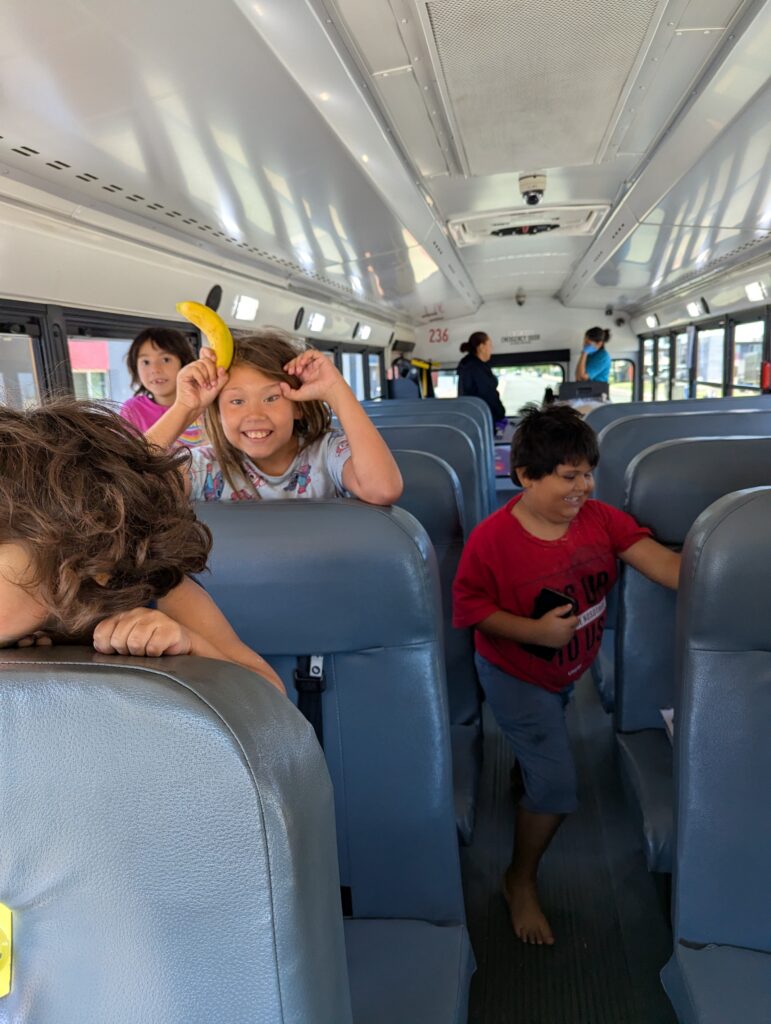
“The biggest challenge we had this year was with the community, getting them comfortable with the bus stop lunch. We talk to them, explain what we do, go in and give flyers, and over time we’ve seen a lot more people come out to eat with us,” Hilda said.
During the school year, where this bus-turned-cafe is parked, two full-size buses of kids get picked up for school each day. There are three apartment complexes on this block, home to a mix of cultures and families of all shapes and sizes, many of them supported by Supplemental Nutrition Assistance Program (SNAP) and SUN Bucks.
“One kid comes and eats his nachos, and then his neighbor says ‘Oh it’s nachos today?!’ So then more kids come, and that makes us happy,” said Hilda. “Every [kid] is welcome, even if they don’t go to school with us. We serve the whole community.”
A gaggle of five kids ranging from ages three to eleven come bounding down the sidewalk from one of the apartment complexes, excitedly shouting, “Pizza!!!”
Their grandmother, Tammy, follows closely behind. She takes care of the kids while their moms, her two daughters, are at work.
“This gives me a break from getting all of them lunch every day,” said Tammy. “They have pizza today and I’m glad, because Augustine loves pizza. And these kids have a lot of energy, so it’s good to get them out of the house. We go swimming and play ball inside all day, so they work up an appetite real quick.”
Miles away, the largest increase in summer meal participation this year was in rural areas — from about 330,000 meals served in 2023 to 1.6 million meals served in 2026!
In Harquahala Valley, Irene from Arlington School District’s nutrition team has a small bus parked outside of the local fire station on a sparse stretch of a two-lane highway. A tractor hauling hay rolls past as families park in the dirt lot.
Irene’s bus runs on fuel funded by No Kid Hungry. They granted over $95,000 throughout Arizona in 2026 to support summer meals programs in rural areas!
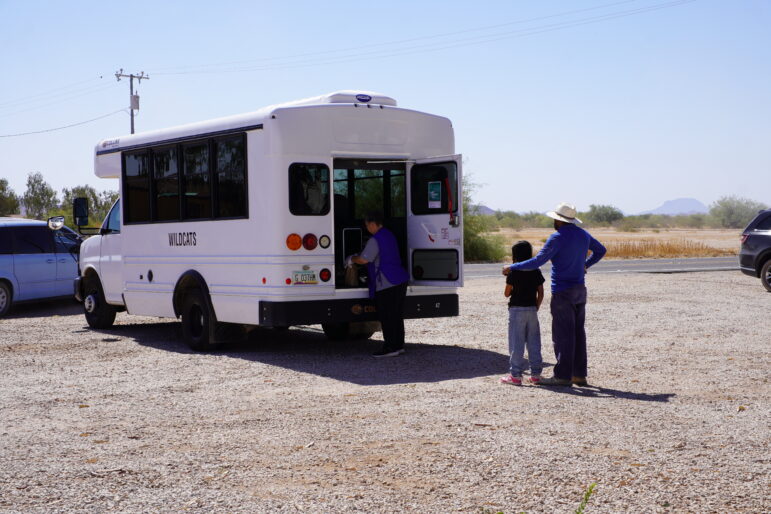
Irene hands out multiple days’ worth of food from the back of her small bus, which is considered a rural, “non-congregate” meal site. Since families travel long distances to reach this meal site, and more than likely live far from grocery stores, the grab-and-go concept works well to stock their fridge.
But Irene knows she is a resource for much more than meals, especially in such a rural area.
“There’s trust here. I know all the kids’ names and I ask about them, how they’re doing. I just like to communicate with my community and I tell them about SUN Bucks, SNAP, food banks, things like that. Whatever they need, I’ll always try to help,” said Irene.
Since January 2025, due to the One Big Beautiful Bill Act (or H.R. 1), SNAP enrollment among Arizonan children decreased by nearly 50 percent — the highest rate in the country. Starting in October, thousands of children could lose their AHCCCS medical coverage, too. Food banks and pantries are trying their hardest to keep up with the growing hunger gap as families fall behind on their bills to feed their kids, so hardworking school nutrition teams in rural and urban areas play an incredibly important role in creating a hunger-free AZ.
The buses these summer meals are coming from may be small, but the feat of feeding hundreds of thousands of kids sure isn’t.
Previously managed by Arizona Health Zone, a state agency, AzFBN is now the primary resource for summer meal resources and information, including the map of summer meals, at azfoodbanks.org/summer-meals. Subscribe to AzFBN’s e-newsletter or follow @azfoodbanks on social media to stay tuned for the 2027 map launch in May!
To connect with AzFBN about school nutrition programs, contact Community Program Manager David Robinson at [email protected].

 English
 Spanish