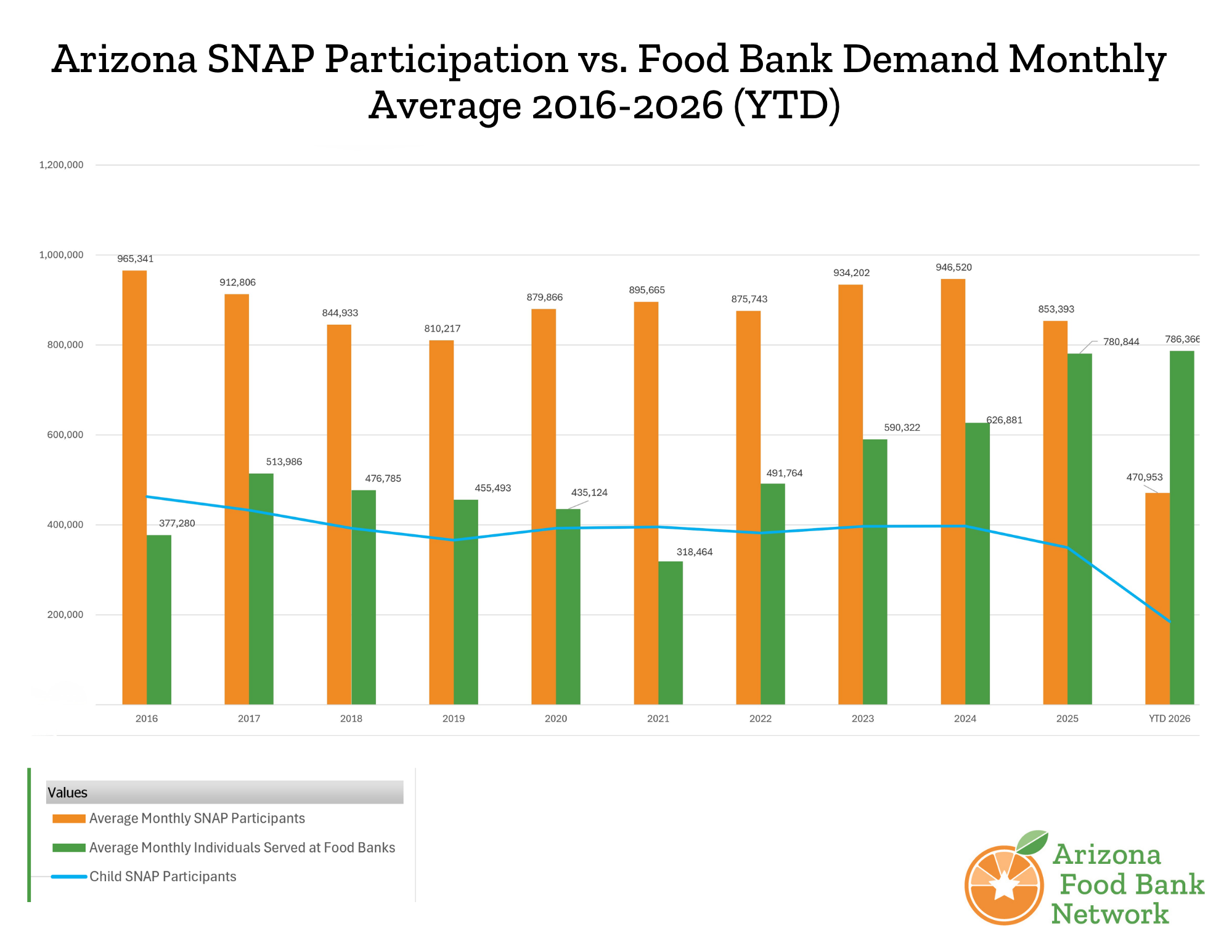
AzFBN has been tracking this data with uniformity since 2016. Food banks are seeing more people visit them every month, and for the first time in late 2025, visits to food banks have started to outpace the number of people receiving SNAP.
At AzFBN, we’re getting many questions along the same theme – how many people are food banks serving, and what happens when people don’t have access to SNAP benefits?
Some may find help with family, friends, and faith communities. Others turn to large regional food banks and agencies across the state that form a network of emergency food help. The chart to the right shows this trend (averaged for each year) through our partial look at 2026.
A visit to a food bank and receiving SNAP are very different things, but still, the data here tells a pretty compelling story: people need food banks now more than at any point in the last 10 years.
A Deeper Dive into the Numbers Since HR 1
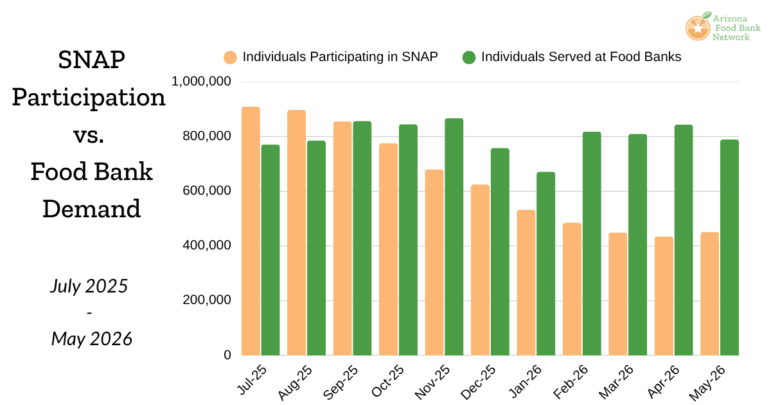
Not all data tells a story. This data, however, shows just what has been happening as changes at the federal level have impacted Arizonans who struggle with hunger.
As we mentioned in a previous post, the number of Arizonans participating in SNAP declined by more than 50 percent since federal law changes in H.R. 1 went into effect in July 2025. This is the largest drop in any state. Despite this decline, the program is still a critical bridge between hunger and food security, and at AzFBN we’re doing everything we can to highlight how critically important it is that more people who are eligible get enrolled. And that’s where we see some good news – look closely at the yellow bar for April and then May – an increase in SNAP. This normally wouldn’t be good news (everyone should be able to afford to eat) but in light of all of this data, it’s a good sign.
But Don't the HR 1 Changes Eliminate Fraud, Waste, and Abuse of SNAP?
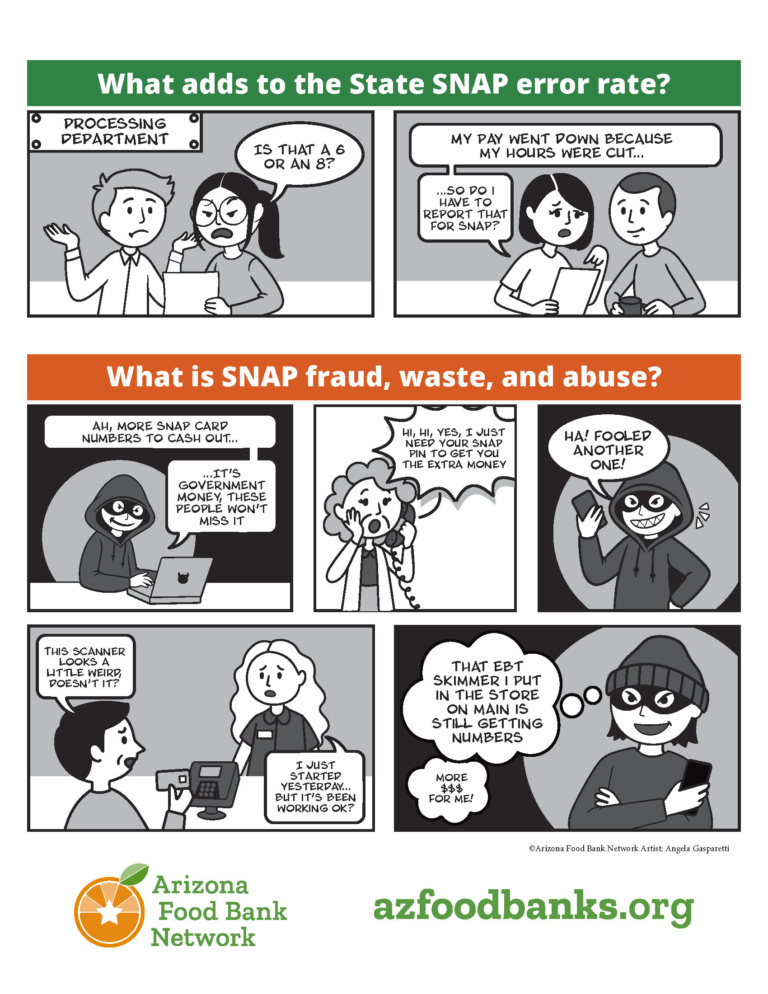
What’s interesting is to see how many people are getting two ideas mixed up. One is the “Error Rate” of the SNAP program administration. It differs by state, and if states don’t get rates below 6%, they will have to share the cost of SNAP benefits – the actual dollars people receive – for the first time in the program’s history. But because the difference between an error and fraud isn’t the easiest idea to explain, we commissioned a little bit of art.
Help if you can, get help if you need it, and know that food banks will continue to do all that they can to get food to our neighbors across Arizona.

 English
  Spanish