
At Chino Valley Unified School District, Superintendent Cindy Daniels knows that a school is much more than a place to learn.
A school is a bridge between one’s circumstances and an infinite world of possibilities. It’s a place to be, a place to feel heard and seen, a place to explore and transform. For many, school is a daily escape from harsh realities at home — empty cupboards and instability.
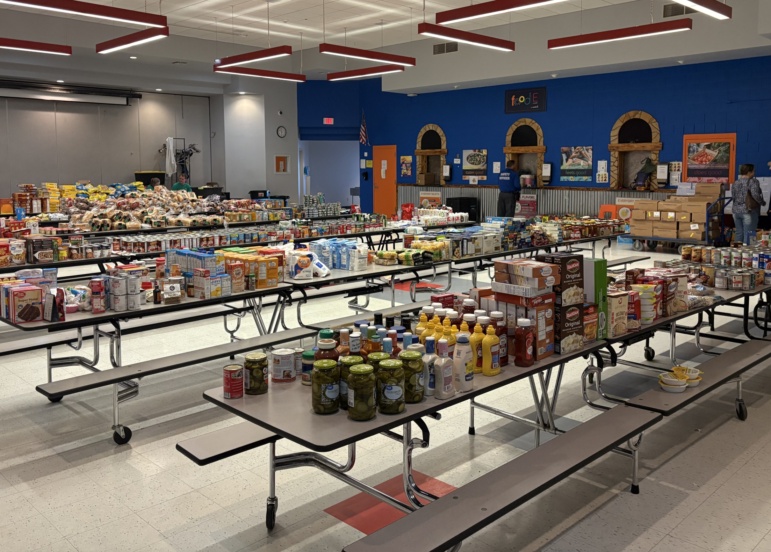
That’s why Superintendent Daniels works so hard to build partnerships in the community that make varieties of food readily available for her students. Her district serves four schools from early childhood to high school, and like most Arizona school districts, they run a school pantry program that any student can utilize. This area in Yavapai County is rural, with some students traveling up to 30 miles to attend school.
Hunger in rural Arizona requires different solutions
“The average rent in Chino Valley is about $2,000 a month, which is part of why our homeless population is so high even among our students,” said Superintendent Daniels. “We have a ton of people doubled up, tripled up, quadrupled up in homes…we’ve got camper dwellers, car dwellers, you know…rural homelessness looks totally different than urban homelessness.”
Thanks to Health First Foundation of Northern Arizona, AzFBN helped this school district fill their pantry with high-value protein options just in time for the holiday season. They were even able to give families grocery gift cards in the spring. Overall, eleven other school districts in northern Arizona were awarded up to $6,000 to fund projects that get more food to more kids!
“Supporting the Arizona Food Bank Network through this grant reflects our commitment to addressing the root causes of health challenges that children and families in Northern Arizona are faced with,” said Mark Urick, Executive Director of Health First Foundation of Northern Arizona. “This investment is about more than meeting immediate needs – it’s about strengthening the partnerships that help Arizona’s children thrive, today and into the future.”
Everybody pitches in to support their neighbors
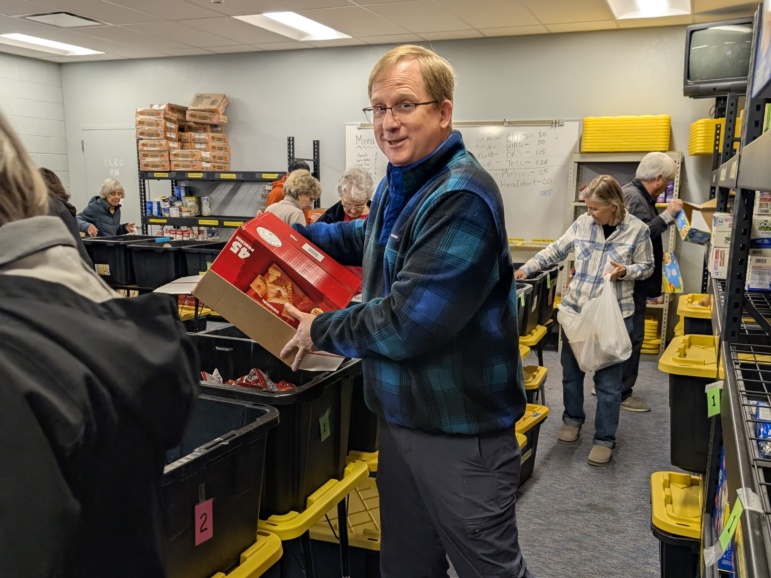
Chino Valley Unified School District’s food pantry served about 500 students with this partnership last holiday season. They were also able to leverage this support to secure other grant opportunities with Chino Valley businesses. Local retirees routinely volunteer their time, the local church pastor makes the pantry a priority for his congregation, and even the school staff come in on the pantry’s weekend hours to support the students.
“The volunteers, most of them have hard luck stories, had a hard life, a hard childhood. They say, ‘In America, no kid should be hungry. It just shouldn’t work that way,’” said Superintendent Daniels. “And so, what do I do after hours, weekends, whenever I have five minutes? Write grant applications, you know, to support what we do…”

“…Because I want kids and families to feel like there’s something more…someone who cares about them.”
Superintendent Cindy Daniels
As of June 2026, more than 200,000 Arizona children have lost federal nutrition benefits since July of 2025 due to changes implemented in H.R. 1 (the federal budget bill). A national survey in 2025 found that 1 in 4 adults relied on credit or savings to purchase groceries and had a hard time with repayment. Arizona food banks are serving close to 900,000 people each month in 2026.
Especially when the odds seem stacked against positive outcomes, community-driven school pantries and mission-driven foundation funders can unite to build bridges of possibility, both for students as well as for rural northern Arizona.
 English
  Spanish